
Best Web Design Packages Under $5000: Complete Value Guide For Small Businesses
- 36 min read
- Last updated: September 7, 2026

Written by
Ethan Weston
Growth Marketer
Five thousand dollars is a lot of money when you are running a small business and trying to make every single dollar count toward your growth and success. Maybe it is more than you have spent on anything besides inventory or equipment, and now someone is telling you that is what a decent website costs for your business. Meanwhile, you see ads for sites at five hundred dollars or even fifty dollars, and the math simply does not seem to add up in your mind.
You lie awake at night wondering whether the difference between a five hundred dollar and a five thousand dollar website is really that significant, which is exactly why understanding web design packages under $5000 is so critical for your business future.
Why This Budget Range Makes Sense For Small Businesses
Five thousand dollars hits the sweet spot for most small businesses that need a professional online presence without breaking the bank entirely. Under a grand, you are usually looking at template mills or overseas work that is completely hit or miss, with sometimes getting lucky but often not.
Over ten thousand puts you in serious agency territory where the work is great, but it is more than most small businesses actually need or can comfortably afford without stretching themselves thin. Between one thousand and five thousand is where real value lives, getting you professional designers with expert website development services that are custom enough to feel like you.
This range will not get you a Fortune 500 site with custom animations and complex functionality that costs a fortune, but it will get you a site that actually works, looks professional, and brings in customers for your business. For most small businesses, that is exactly what matters most when they are trying to establish themselves online and compete with larger companies. You get professional results at prices that fit real budgets without sacrificing the quality that makes your business look trustworthy and credible.
What Quality Web Design Packages Under $5000 Actually Include
Let us get specific about what you should actually expect when you are paying in this range for your business website. A good package typically includes a strategy call where the designer learns about your business, your audience, and your goals so they understand what you need. They will create a sitemap listing every page, so nothing gets forgotten, then wireframes showing basic layout before any design happens, giving you a chance to review the structure.
After that comes design mockups showing what the site will actually look like, usually starting with the home page, getting your feedback, then designing the rest of the pages.
Responsive design ensures everything works on phones because that is where most people browse now, and this is absolutely non-negotiable in 2026. Content upload means they put your text and images where they belong, and basic SEO gets handled with page titles, meta descriptions, and proper heading structure that helps people find you.
Testing catches problems before launch, launch day comes, training shows you how to update your own site if needed, and most packages include thirty days of support to fix any post-launch issues that come up.
What Custom Website Cost Usually Does Not Include
Being realistic about what is not included in your package saves headaches later and prevents unpleasant surprises. Copywriting is often extra because words on the page matter tremendously, but good writing takes time and skill that designers do not always provide. Professional photography sits outside most packages too, because while stock photos might be included, custom images of your team and space cost more money to produce.
Logo design is sometimes separate and sometimes bundled, so ask before you assume anything about your package. Complex animations and fancy scrolling effects add time and cost significantly, while custom programming beyond standard features gets expensive fast.
Ongoing maintenance after that first month typically becomes a separate monthly arrangement, and deep SEO services beyond basic setup belong in a different budget entirely. Content creation like blog posts or videos is not usually part of website packages either, so know what you are getting and what you are not, then decide what matters enough to pay extra for.
Three Affordable Website Design Packages You Will Find At This Price
TEMPLATE-BASED CUSTOMIZATION
Template-based customization usually runs between one thousand and twenty-five hundred dollars, where you pick a template from a library and the designer customizes colors, fonts, images, and content to fit your business. The result looks professional and costs less because they are not building from scratch, working greatly for service businesses, consultants, and local shops that do not need anything fancy.
The trade-off is limited flexibility and a slight chance your site might resemble others using the same foundation, but for many businesses this is perfectly acceptable.
CUSTOM WEBSITE DESIGN
Custom design on popular platforms like WordPress, Squarespace, or Webflow runs between twenty-five hundred and forty-five hundred dollars, where the designer builds something more unique and personalized specifically to you.
This suits businesses that want to stand out, need something specific, or plan to grow significantly, getting more flexibility and a more distinctive look. It takes a bit longer and costs more, but the results feel more like you and your unique business identity.
ECOMMERCE WEBSITE STARTER
eCommerce website starter packages land between three thousand and five thousand dollars, including online store functionality with product pages, shopping cart, and checkout, usually built on Shopify or WooCommerce.
This gives you everything needed to start selling online, though the budget limits how many products you can launch with and keeps features fairly basic. It is enough to get going and prove your concept before investing more heavily in your online store.
How To Compare The Packages Fairly
Looking at websites side by side is hard because everything looks different, so you need a systematic approach to make fair comparisons. Do not just glance at the designs but look at the businesses they have worked with, asking whether they are like yours and whether those sites actually work well on phones. Read reviews from past clients and find out whether they were happy and whether they would hire the same designer again for future projects.
Ask about their process and how they work, what the actual steps are, and who does what at each stage of the project. Pay attention to communication when you are interviewing them, noticing whether they respond quickly, clearly, and helpfully, because the way they talk to you now is exactly how the project will go later.
Make a spreadsheet comparing inclusions and list what each package offers side by side to see who gives more for the money, and if possible, talk to past clients directly about their experience.
Affordable Website Design Without Sacrificing Quality
You can save money without settling for garbage by taking some simple steps that reduce your costs significantly. Provide your own content ready to go on day one, including text, images, and logos, because having all your materials ready saves designers hours of chasing you for information.
Be decisive about what you want and know your preferences before you start, giving clear feedback the first time instead of going back and forth ten times.
Limit your pages to the essentials because you can always add more later when the site is making money and choose simpler design over complex because clean and straightforward costs less to build and often works better anyway.
Ask about payment plans if the total feels heavy because many designers spread payments out, and book during slower seasons if you can because designers sometimes offer discounts when they have openings. Bundle services like logo and website together because that combination often costs less than buying them separately from different people.
Small Business Web Design Priorities
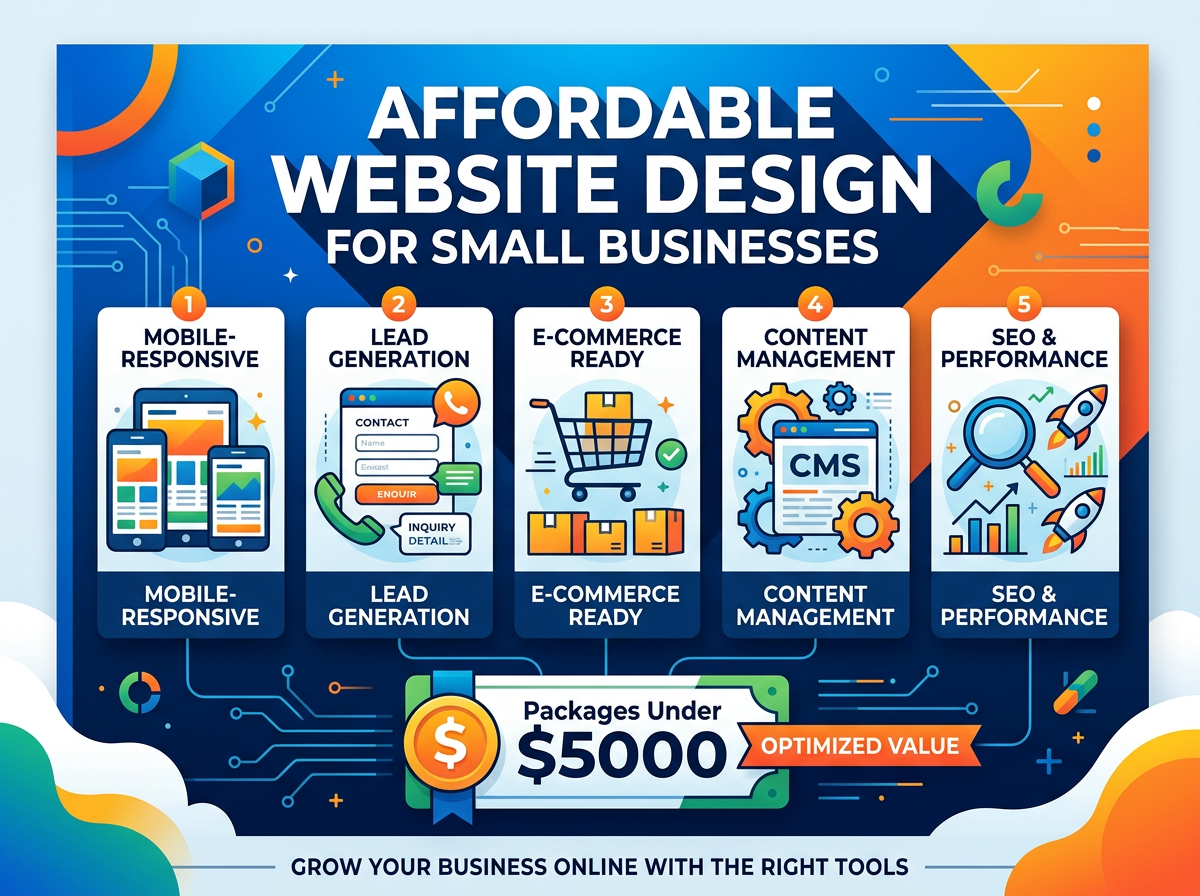
For most small businesses, certain things matter more than others when it comes to website design and functionality. Clear messaging sits at the top of the list because people should know what you do within seconds of landing on your site, with no guessing and no hunting for information.
Easy navigation comes next because visitors need to find what they want fast without thinking about it or getting frustrated.
Mobile-friendly design is non-negotiable in 2026 because most of your visitors will be on phones and your site must work perfectly on those tiny screens. Fast loading matters enormously because every second of delay costs you customers and hurts your search rankings, so prioritize speed above all else.
Contact information should be obvious with phone, email, and location right there where people expect to find them.
Social proof builds trust quickly through testimonials, reviews, and logos of past clients providing real evidence that you deliver on your promises. Calls to action tell people what to do next, whether that is buy, call, email, or visit, and simple design that is easy on the eyes beats fancy every time for converting visitors into customers.
Custom Website Cost Breakdown
Understanding where your money goes helps you value what you are buying and see the real work behind the price tag. Strategy and planning cost about five hundred dollars for research, sitemap, and wireframes representing the thinking before the doing.
Design runs around fifteen hundred dollars for home page, inner pages, and mobile versions that make things look right and feel intentional.
Development costs around twelve hundred dollars for building the actual site and making everything work properly. Content population adds three hundred dollars for putting your words and pictures where they belong.
Testing and revisions run another three hundred dollars for catching problems, fixing issues, and getting things right. Project management adds two hundred dollars for emails, calls, and keeping everything moving forward.
Launch and training runs two hundred dollars for going live and showing you how things work, with a buffer of three hundred dollars covering unexpected stuff that always comes up.
Choosing The Right Platform
WordPress design dominates this price range for good reason because it is flexible enough to build almost anything and scales as your business grows. You can update content yourself without calling a designer, thousands of plugins add features when you need them, and development happens faster which keeps costs down for you.
Squarespace and Wix work for very simple sites where ease matters more than flexibility, but they limit your ability to grow.
Webflow gives designers more control but takes longer to learn, so if you find a designer who knows it well, results can be stunning. Shopify exists specifically for eCommerce websites, so if you are selling products, it is worth considering even at this budget.
Custom coded sites do not really exist under five thousand dollars because that level of custom work simply costs more than this budget allows.
Ecommerce Considerations At This Price
Selling products changes everything about your website requirements and costs significantly. Each product needs its own page, which means more design and development work, and cart and checkout functionality adds complexity that must work perfectly every time. Payment processing must work flawlessly, and shipping calculations, tax rules, and inventory management all pile on additional requirements.
Under five thousand dollars, you can get a basic eCommerce site with ten to twenty products, standard features, simple design, and straightforward checkout that is enough to start.More products than that, complex shipping rules, subscriptions, or custom functionality will push the budget higher than this range. Start simple, get the basics right, and add more as revenue comes in from your online store.
Portfolio Websites For Creatives
Photographers, designers, artists, and writers need something different from standard business websites because their work is the star of the show. Design should showcase your work, not compete with it, and image-heavy layouts with galleries and sliders matter enormously for visual impact.
Full-screen images that load fast and look incredible are essential for making a strong impression on potential clients.
Navigation should be simple and let people see your work quickly without jumping through hoops, and contact information must be obvious because when someone loves your work, they need to reach you immediately.
Portfolio websites work well in this budget, just make sure your designer understands image-heavy sites because not everyone does.
Landing Pages Vs Full Websites
Sometimes you do not need an entire website with multiple pages and complex navigation to achieve your goals. A landing page focuses on one thing, one product launch, one event, or one specific offer, with just one page that costs less, builds faster, and is easier to manage.
If you are just starting, testing an idea, or promoting something specific, consider a landing page first and build the full site later when you have proven your concept.
Start lean, prove your concept, then expand as your business grows and your needs become clearer.
Questions To Ask Before Hiring Anyone
Ask every potential designer the same questions to protect yourself and ensure you are making a wise investment. What is your process, and do they have clear steps they can explain to you?
What is included in this price, and can you get a detailed list in writing? What is not included, so you know what extra costs before you start spending money?
Can I see similar work, specifically sites like yours in your industry? Who will I actually work with, one person or a team, and who answers emails when something goes wrong?
How do revisions work, how many rounds, and what is the actual process for changes? What happens after launch, is there support, training, or maintenance options available?
Can I talk to past clients, because references are worth their weight in gold?
Frequently Asked Questions About Web Design Packages Under $5000
CAN I REALLY GET A GOOD WEBSITE FOR UNDER FIVE THOUSAND DOLLARS?
Yes, absolutely, and thousands of small businesses do it every single year with great results. You get a professional, functional website that looks good and works well without the Fortune 500 price tag. The key is to know what to expect and choosing the right designer for your needs.
WHAT IS THE DIFFERENCE BETWEEN A $500 AND A $5000 WEBSITE?
A five hundred dollar site is usually a template with your name slapped on it, limited customization, and minimal strategy behind it. A five thousand dollar site includes custom design, proper planning, mobile optimization, testing, and ongoing support for your business. The difference in quality, functionality, and results is substantial.
HOW MANY PAGES CAN I GET FOR UNDER FIVE THOUSAND DOLLARS?
Most packages in this range include five to ten pages, which is plenty for a small business website. You typically get a home page, about page, services or products page, contact page, and maybe a blog or portfolio section. More pages will cost extra but are usually not necessary for most businesses.
DO I NEED ECOMMERCE FUNCTIONALITY FOR MY WEBSITE?
Only if you are selling products or services directly through your website, because otherwise you do not need the complexity and cost of eCommerce. Many service-based businesses do just fine with a simple brochure-style site that generates leads through contact forms. Add eCommerce only when you are ready to start selling online.
HOW LONG DOES IT TAKE TO BUILD A WEBSITE IN THIS PRICE RANGE?
A typical project takes four to eight weeks depending on the complexity and how quickly you provide feedback and content. Simple template-based sites can be faster, while custom designs and eCommerce sites take longer. Your timeline should be clearly communicated upfront.
Ready For A Website That Actually Brings In Customers? Let Us Talk.
You came here wondering about web design packages under $5000 for your small business, and now you have all the information you need to make a smart decision about your online presence. You know what quality packages include and what they do not, how to compare options fairly, and how to get the most value for your specific business needs.
You know about affordable website design that does not sacrifice quality, the importance of responsive design and mobile-friendly functionality, and the difference between portfolio websites, landing pages, and eCommerce websites for different business types.
That is where The Designers Agency comes in to help you build a website that actually works for your small business. We are not just another design shop but a results-driven branding and marketing agency that helps businesses grow with purpose and intention. We have been recognized as one of the top agencies not for being flashy but for delivering real results that help our clients build successful businesses.
When you work with us, we start by understanding your business, your audience, and your goals, and then we build something that actually brings in customers.
We have built hundreds of sites for small businesses exactly like yours, and we know what works and what does not work in the real world. We know how to deliver value without breaking your budget, and we do not hide what is included in our packages.
We will tell you upfront with no surprises halfway through and no oh that is extra when you are already committed to the project. Whether you need a simple portfolio website, a focused landing page, or a full eCommerce website to start selling online, we have got you covered with the right solution for your needs.
You bring your business and your vision, and we bring the expertise and the experience to build something that actually works. Together, we will create a website that looks professional, works perfectly, and brings in customers every single day.
Your business deserves a website that reflects your quality, your customers deserve to find you easily and trust what they see, and you deserve a website that works as hard as you do.
Table Of Content
Why This Budget Range Makes Sense For Small Businesses What Quality Web Design Packages Under $5000 Actually Include What Custom Website Cost Usually Does Not Include Three Affordable Website Design Packages You Will Find At This Price How To Compare The Packages Fairly Affordable Website Design Without Sacrificing Quality Small Business Web Design Priorities Custom Website Cost Breakdown Choosing The Right Platform Ecommerce Considerations At This Price Portfolio Websites For Creatives Landing Pages Vs Full Websites Questions To Ask Before Hiring Anyone Frequently Asked Questions About Web Design Packages Under $5000 Ready For A Website That Actually Brings In Customers? Let Us Talk.
Unlocking Digital Prowess through Innovative Solutions and Unparalleled Customer Service.
Get in Touch Now!

Ready To Grow Your Business Online?
Tell us what you need. We'll help you figure out the next step.
Phone
+1 (855) 554-4057Package